Music Production
Music Production
The Crash Symphony Music Production Team has long experience producing songs and albums with famous artists, such as Deni Hines, Erika Heynatz and “The Voice” finalist – Alex Gibson. Popular Crash Symphony Music Producer James Englund has personally produced more than fifty high-end studio albums, EPs and singles. Clients are welcome to use their own music producer and Crash Symphony are happy to work with you and your music producer to capture your very best performance in stunning, hi-fidelity audio.
Would Highly Recommend
Music Production as a Profession
The term, “Music Producer” has become a very diverse title now that music production is more accessible through home computing. It is important that we clarify what we mean by the term: A professional music producer is a person that an artist or company employs, with the sole purpose of bringing a musical project to fruition. This can involve a range of tasks like:
Making sure the Music Production is completed within budget
Helping the Music Production reach the artistic and/or business aspirations of the client
Bridging the gap between the music needs and the technical requirements
Organising the right musicians for the Music Production
Every music producer is different. They all have their own strengths and weaknesses and can bring colour to your productions in varying ways. The below link is an article that was published by Crash Symphony Productions. It explains some of the differences that exist amongst music producers and how they can take various approaches to music production. We invite you to read the article in the hope it assists you in choosing the right producer for your music production.
Read the Article Here
Music Production can encompass a number of different approaches. It can be as simple as recording a single vocalist to as complex as a full rock band that is backed by an orchestra as well as computer programming. There’s a lot technical knowledge to cover. Most music production professionals will specialise in one area, or be proficient in a few areas. Modern music productions are becoming increasingly “in-the-box”. This is a term that refers to the production activity that occurs inside the computer. Conversely, recording an orchestra or rock band is not an “in-the-box” process. Of course. eventually it will end up as audio that is manipulated inside the computer, but the process starts as real instruments. These days there are all kinds of emulated instruments that are available as software packages. Grand pianos can be recorded as virtual instruments. This is also true for almost any other instrument and ensemble you can imagine. For example, Strings, drums, choirs, percussion, and more, can all be accessible as a software instruments. Is this better than recording the real thing from scratch? Not necessarily. It’s different. Like with everything, there are many pros and cons that come along with these options. Our Music producers are experts on what is currently available and what will suite your project. Keep in mind, your choice doesn’t just rely on sound. There can be budget limitations and/or speed of production requirements that can impact on which methods to employ in the music production. These are all the choices that experienced music production professionals can help you to make.
Recording a Single, EP, or Album?
The decision to record a single, EP, or album, can also be a hard choice for an artist. Many artists have a lot of material but are restricted by other factors like time or budget. It is important to meet with your producer regarding your music production prior to commencing. When it is clear what the end result needs to be for the music production, then it is clear what steps need to be taken to reach that goal. When the appropriate information is given to a good music producer they will be able to formulate an exact budget and time frame for completion of the project. The amount of pre-production that is required will depend on the music production that happens in our Sydney recording studio. What is pre-production?
Pre Production
Pre-production is the process of preparing before the production begins. This involves rehearsal times, selection of musician, mapping a time-line to completion, creating a post-production marketing structure, planning for the budget, and more. However, the amount of pre-production is different for every project and artist. For example, solo artists that plan to do everything “in-the-box” and rely heavily on the music producer’s input, will require much less pre-production. Alternatively, bands who will be playing all their own musical instruments, will require more pre-production. Choosing the right amount of pre-production for your project is the responsibility of the music producer. The right amount of pre-production will save your project a huge amount of time and money. Musicians will play better, less recording attempts (“takes”) will be required, and less money will be spent editing and fixing errors after the performance. View Music Production Examples
Clients Say
- Crash Symphony Productions was beyond excellent to work with! Being in LA, scheduling in Australia had its challenges, but everyone at the studio made a tremendous effort to get back to me as soon as possible. At times, due to actor schedules, ADR can be tricky, but much-needed at the last minute. Crash Symphony worked with the actor’s tight schedule, to make sure all of our studio’s needs were met!
Carly Neher – Google Reviews
Carly Neher – Post Coordinator “The Bridge” Season 2 – Warner Bros Television
- “Crash Symphony Productions run an extremely professional and reliable service. I’ve been using CSP for the past three years and they’re always ready to go the extra mile for us.
Their prices are great, the service is great and I wouldn’t hesitate to recommend CSP for any sound production/ recording needs. It’s a real pleasure to know these guys and to work with them.”
Genevieve Clay – Google ReviewsGenevieve Clay-Smith 2009 Tropfest Winner and Director of Taste Media
- “I think James is one of the most creative, clever and generous people I have met. He is helpful, listens and allowed us to share some of his unique and wonderful compilations with a joy video that we released. I recommend him unreservedly – he is GREAT value!”
https://www.old.crashsymphony.com.au/wp-admin/post.php?post=250&action=edit#
Amanda Gore – Google ReviewsAmanda Gore – International Speaker & Founder of the Joy Project
- “I have so enjoyed working with Matt and found him to be a dedicated and mature artist. In fact I so enjoyed our collaboration that immediately asked him to work with me on my next film.
I love Matt’s ability to respond to the script, characters, and the insanity of a director in a skilled, productive and creative way. I respect Matt’s creative ideas and admire his ability to easily and confidently handle many different music genres. ”
Margaret McHugh – Google Reviews
Margaret McHugh – Director
- “I have watched Matt grow into a highly proficient and creative screen music pratitioner. He is very adaptable across a wide variety of styles and his world music compositions are also of a very high standard.”
Vicki Hansen – Google Review
Vicki Hansen – Big Bang Music – Composer for SBS & ABC TV
- “Matt is not only a talented musician and composer who will write beautiful music for your film; he’s a true creative professional.
He works incredibly well to briefs, communicates clearly with filmmakers, and explains all of the wild musical terminology in plain English. I can’t recommend him highly enough.”
Margaret McHugh – Google Reviews
Katia Nizic – Film Producer and Critic
- “Matt is a joy to work with. He has an instinctive understanding of drama, composing beautifully for both performance and story. His subtle, delicate score for The Orchard contributes immensely to the atmosphere, metaphor and subtext of the film, helping the audience access the feeling states and complex character perspectives of the film.
I highly recommend Matt and his work to both producers and directors.”
Laura Scrivano – Google Reviews
Laura Scrivano, Writer/Director Winner – 2013 European Union Film Award (The Orchard)
- “On brief, timely and great to work with, Crash Symphony Productions have everything you want in a creative partner.”
Shane Carn – Google Reviews
Shane Carn – Creative Director for TVC – Lead Generation Lab
Expert Sound Engineers
Working with us means working with the best sound engineers in Sydney
The art of being an excellent sound engineer is not as prominent now that video has become the focus of our world. However, a top quality sound engineer can augment the quality of a production dramatically. When we record a vocal for music or a voice over for an ad we have the ability to enhance every aspect of that recording. The modern tools available to the twenty-first century sound engineer are truly remarkable. Staying on top of the rapid progress is very much a full time job. Let's take a quick look at what work is involved in producing an excellent vocal recording for a typical voice over job.
Our sound engineer will setup the session prior to the talent arriving. In the most extreme cases, often film ADR sessions, the project and microphones will need to be prepared first. Our clients, from film productions companies, are often located in another country like the USA, the UK, or somewhere in Europe. They will send the sound engineer the program material. This will be the video files with SMPTE timecode, the cue sheet, and all specifications required by our sound engineer to capture a similar sound to what was recorded on set.
Once these program elements are received our sound engineer in Sydney will go into Pro Tools and mark out all the cue points on the timeline of the film. Each entry point will have ADR beeps that will help the talent execute their lines in Synch with the film. In ADR the talent's job will be to lip synch in time with their delivery on set. By setting up the project prior to the talent arriving our sound engineer ensures that the session flows smoothly for the talent.
Often these "remote sessions" (where the directors and producers are overseas) are facilitated by software that helps us communicate with the overseas studios. Programs like Zoom and Source-Connect allow sound engineers in both locations to be actively involved in the session. The sound engineer overseas can literally press the recording button in one country and our software will obey the command here in Sydney. The directors and producers can watch the video content on their screen whilst listening to the audio being recorded by our sound engineers in Sydney. It's real-time. It's the modern way. It's remarkable!
In this example, an ADR recording session, the sound engineer would also need to setup two microphones. One would be a lapel mic, similar to what might have been used on set, and the other a shotgun microphone. These two microphones are setup by our sound engineer in Sydney in front of a screen. This is to allow the talent to clearly view the film as they are performing. An iPad is also positioned in close proximity to the microphones. This will have all the cue points and lines that the talent will be reading during the ADR recording session.
During the session the sound engineer will be facilitating the smooth capture of cue lines. They make sure that all the takes of each line are saved for future recall and re-listening, and can even cut recorded takes together to create a composite "best take".
Once the ADR session is complete the post-production work on the re-recorded lines begins. The amount of work that goes into the audio post-production is beyond the scope of this example. However, we can give a few examples of the kind of technology our sound engineer might decide to use on the recorded cue lines. There is software to reduce lip and mouth noises. Harsh sibilant frequency can be curtailed. The synch of the spoken lines can be further tightened by intelligent algorithms that look at the original "on set" spoken audio and literally stretch, cut, and compress lines recorded in our Sydney recording studio and make them even tighter. The list of tasks, options, and enhancements that our sound engineer can apply to a voice recording is enormous.
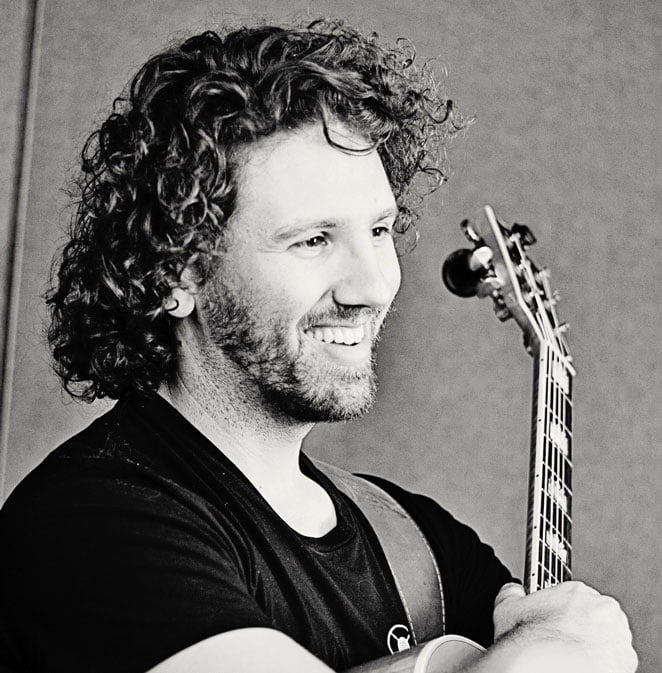
James Englund
Founder
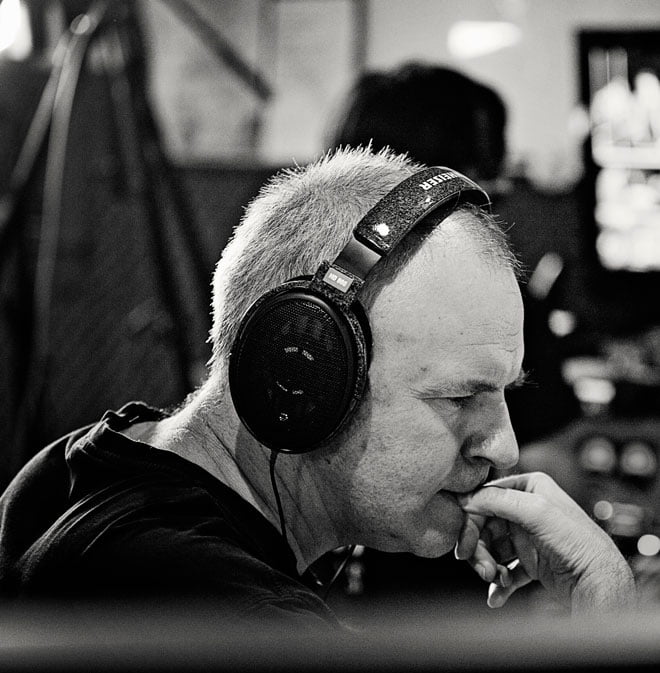
Stewart Havill
Engineer/Producer
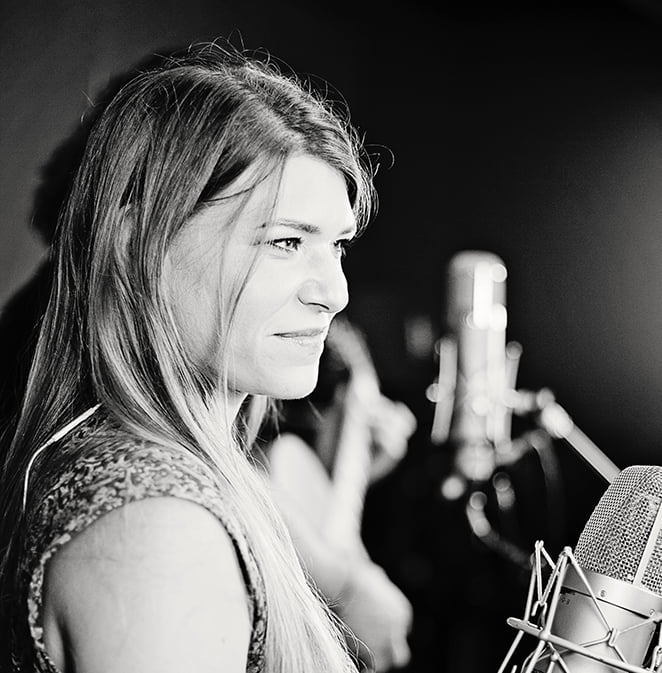
Borbala (Bobo)
Session singer and Admin
Want to book a recording studio?
OPENING HOURS
24/7